
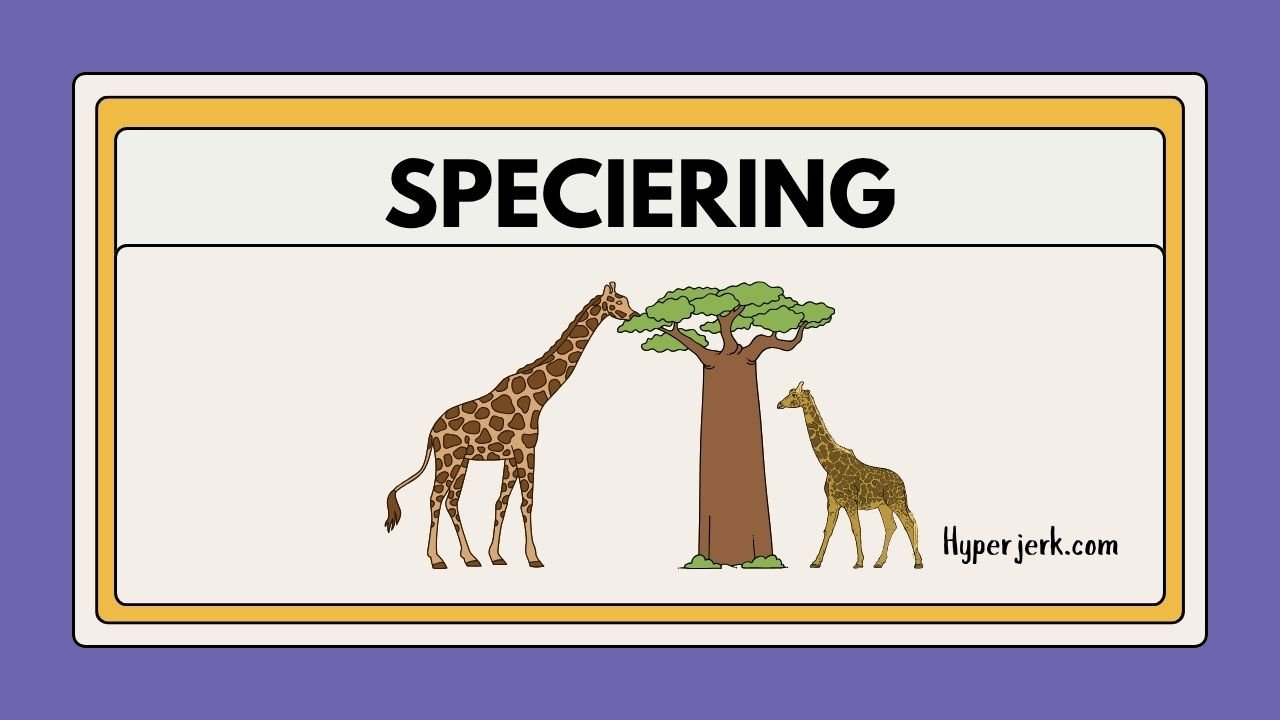
Every living thing on Earth, from the tiniest bacterium to the towering blue whale, shares a common ancestry. Yet, through countless generations and adaptations, life has diverged into millions of distinct species. This evolutionary process of forming new species is called speciering — more accurately known in biology as speciation.
Speciering is the engine behind the diversity of life. It explains why there are so many unique plants, animals, and microorganisms inhabiting every corner of our planet. Understanding speciering gives us insight into evolution itself — showing us how isolation, mutation, selection, and time weave together the incredible tapestry of biodiversity we see today.
What Is Speciering (Speciation)?
In biological terms, speciation is the process by which a single ancestral species evolves into two or more distinct species that can no longer interbreed successfully. Over time, reproductive barriers — whether physical, genetic, or behavioral — separate populations and prevent them from mixing their genes.
In simple words, speciering occurs when one species splits into two due to changes in their environment, behavior, or genetic makeup. These newly formed species then follow their own evolutionary paths.
The Four Main Types of Speciering
Biologists recognize four major types of speciation, each based on the degree and kind of isolation that separates populations:
1. Allopatric Speciation (Geographic Speciering)
Allopatric speciation happens when a population is divided by a physical barrier such as a mountain range, river, or ocean. Over generations, the separated groups evolve independently. Eventually, genetic differences accumulate, making interbreeding impossible even if the barrier disappears.
Example:
Darwin’s finches in the Galápagos Islands are a classic case. Each island’s finches evolved unique beak shapes suited to local food sources — a direct outcome of geographic isolation.
2. Peripatric Speciation (Small-Island Speciering)
Peripatric speciation is a special case of allopatric speciation, occurring when a small group breaks away from a larger population and becomes isolated on the edge of its range. Because of its small size, the new population experiences strong genetic drift — rapid changes in gene frequencies that can lead to quick divergence.
Example:
Flightless birds on isolated islands, like the New Zealand kiwi, likely evolved through peripatric speciation.
3. Parapatric Speciation (Borderline Speciering)
In parapatric speciation, populations are partially separated — they share a border but occupy distinct environments. Natural selection pressures differ on each side, leading to adaptation and divergence. Though some interbreeding may still occur, over time, reproductive barriers form.
Example:
Certain species of grass growing near metal-contaminated soils in mines have adapted to toxic conditions, diverging from nearby populations that live in normal soils.
4. Sympatric Speciation (Same-Area Speciering)
Sympatric speciation occurs without physical separation. Instead, new species arise within the same geographic area, often due to behavioral changes, genetic mutations, or ecological preferences.
Example:
Apple maggot flies in North America began preferring apples instead of native hawthorns, eventually forming distinct species despite living in overlapping territories.
The Mechanisms That Drive Speciering
Speciering doesn’t happen overnight. It’s a gradual process, driven by evolutionary mechanisms such as:
-
Genetic Mutation: Random changes in DNA that create new traits or adaptations.
-
Natural Selection: Favoring traits that improve survival and reproduction in a given environment.
-
Genetic Drift: Random changes in gene frequencies, especially in small populations.
-
Reproductive Isolation: Physical, behavioral, or genetic barriers that prevent populations from interbreeding.
-
Environmental Change: Shifts in climate, food availability, or geography that separate populations.
Together, these forces slowly build the walls that divide populations, eventually creating new species.
Speciering and Reproductive Isolation: The Heart of New Species Formation
At the core of speciering lies reproductive isolation — the inability of different populations to breed successfully.
Reproductive barriers can be:
1. Prezygotic Barriers (Before Fertilization)
-
Habitat Isolation: Species live in different environments.
-
Temporal Isolation: They breed at different times of year or day.
-
Behavioral Isolation: Mating rituals differ.
-
Mechanical Isolation: Physical differences prevent mating.
-
Gametic Isolation: Sperm and egg are incompatible.
2. Postzygotic Barriers (After Fertilization)
-
Hybrid Inviability: The embryo doesn’t develop properly.
-
Hybrid Sterility: The offspring (like mules) are sterile.
-
Hybrid Breakdown: Later generations are weak or infertile.
These barriers ensure that, once speciering begins, it continues — protecting the distinct genetic identity of new species.
Famous Examples of Speciering in Nature
Speciering is visible everywhere in nature. Some well-documented examples include:
-
Cichlid Fish in African Lakes: Hundreds of cichlid species evolved from a common ancestor, each adapted to different food sources and habitats.
-
Darwin’s Finches: Different beak shapes and feeding strategies evolved across island populations.
-
Polar Bears and Brown Bears: Diverged as populations adapted to Arctic and forest environments.
-
Orchids and Pollinators: Co-evolution led to flower species uniquely adapted to specific insect pollinators.
Each of these examples showcases evolution in action — life finding unique ways to thrive and diversify.
Why Speciering Matters: The Bigger Picture
Speciering is not just a fascinating concept — it’s a cornerstone of evolution and biodiversity conservation. Understanding how species form helps scientists:
-
Predict how organisms might respond to environmental changes.
-
Protect endangered species by preserving genetic diversity.
-
Identify unique lineages essential to ecosystem balance.
-
Understand the origins of human evolution and genetic diversity.
In an era of climate change and habitat loss, studying speciering helps us see the urgency of preserving the delicate processes that create and sustain life on Earth.
Human Influence on Speciering
Humans are not just observers — we are active participants in the process of speciering. Our actions accelerate or alter natural evolutionary pathways.
Human-Caused Isolation
Deforestation, urban development, and pollution fragment habitats, isolating populations and triggering rapid evolution.
Artificial Speciering
Selective breeding in animals and plants is a form of human-guided speciation. Think of how wolves became dogs or wild mustard gave rise to cabbage, kale, and broccoli.
Hybridization and Climate Change
As species migrate due to warming climates, new hybrids emerge — some fertile, some sterile — blurring traditional species boundaries.
The Ongoing Mystery of Speciering
Despite centuries of research since Darwin’s On the Origin of Species, speciering remains partly mysterious. Scientists are still uncovering the genetic mechanisms behind species divergence, and new tools like genomics are revealing complexities we never imagined.
Questions like these continue to fuel evolutionary biology:
-
How fast can new species emerge?
-
Can speciation reverse (when separate species merge back together)?
-
What role does hybridization play in evolution?
The answers help us understand not just other organisms — but our own origins as a species.
How Long Does Speciering Take?
Speciering can take thousands to millions of years, but the timeline varies dramatically. Some cichlid fishes formed new species in less than 10,000 years, while others took millions.
The pace depends on:
-
Mutation rates
-
Environmental pressures
-
Population size
-
Geographic isolation
-
Reproductive barriers
The more extreme the conditions and the smaller the isolated group, the faster speciering tends to occur.
Explore the Wonders of Evolution
Speciering is a living story — unfolding every day, in every ecosystem. From microbes in deep-sea vents to mammals in rainforests, evolution is constantly shaping new forms of life.
If you’re fascinated by how nature creates, adapts, and diversifies, explore more about evolutionary biology and biodiversity conservation. Visit your local nature reserves, follow reputable science resources, or even start your own blog sharing how life evolves around you.
The more we understand speciering, the better equipped we are to protect the future of life on Earth.